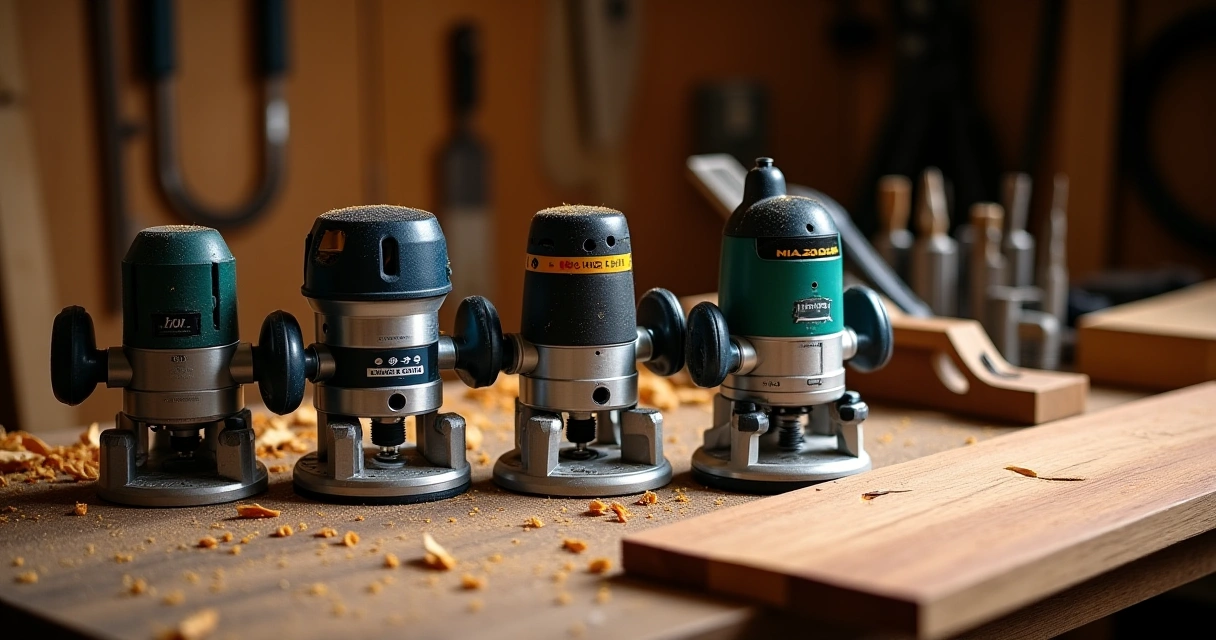

Routers Buying Guide What To Look For In 2026
I've run a router through every sort of stock you can imagine — soft pine with the grain direction changing on a whim, walnut for a dovetail, oak for a mortise-and-tenon — and I don't suffer junk tools gladly. If you're a serious hobbyist or a semi-pro, you want honest talk about motor guts, collet size, base stability and whether a trimmer will survive a weekend of real joinery. In this 2026 buying guide I'll tell you which features actually matter on the bench and which shiny specs are shop-floor noise, so you can pick a router that holds its fence alignment and lives long enough to teach your apprentice. Read on and I'll point out the traps: high rpm without control, plastic bases, and accessories that are more filler than help.
⚡ Quick Answer: Best Woodworking Tools
Best Starter Router Kit: TEENO Wood Router, 6.5Amp 1.25HP Wood Routers for Woodworking, 800W Hand Wood Router Tool, 31000R/MIN Compact Edge Trimmer with 15 1/4" Router Bit Set
$35.99 — Check price on Amazon →
Table of Contents
Main Points
- Power and speed: Look beyond headline RPMs — a high 31,000 R/MIN trim motor (like the compact 6.5A/800W units) is great for edge trimming, but you need variable speed and a soft-start to control feed rate and avoid burning the kerf when routing across the grain.
- Collet size matters: 1/4" collets are fine for trim bits and light profiling, but if you plan dovetails, mortise-and-tenon work or heavy rabbets, insist on (or at least adaptability to) a 1/2" collet for stiffer bits and less chatter.
- Base and depth control: A solid aluminium fixed or plunge base with micrometer depth stops and smooth plunge action keeps cuts repeatable — anything with a loose plastic base or sloppy depth knob will wreck your fence alignment and joint fit.
- Build quality and longevity: Pay for metal bearing housings, good motor cooling and dust management — cheap hardware-store routers with plastic internals and no dust port won't survive a weekend of hardwood work.
- Accessories and compatibility: Bit quality, collet wrench, edge guides and the ability to mount to a router table matter more than gimmicks — included 1/4" bit sets are useful, but verify carbide tips, and make sure the router will accept your jigs, fences and table clamps.
Our Top Picks
| Best Starter Router Kit |  | TEENO Wood Router, 6.5Amp 1.25HP Wood Routers for Woodworking, 800W Hand Wood Router Tool, 31000R/MIN Compact Edge Trimmer with 15 1/4" Router Bit Set | Key Feature: Affordable starter router kit with 15 bits | Motor Power: 6.5 Amp / ~800W / 31,000 RPM | Collet Size: 1/4" collet (1/4" bit set included) | Check Price on Amazon | Read Our Analysis |
More Details on Our Top Picks
-
TEENO Wood Router, 6.5Amp 1.25HP Wood Routers for Woodworking, 800W Hand Wood Router Tool, 31000R/MIN Compact Edge Trimmer with 15 1/4" Router Bit Set
🏆 Best For: Best Starter Router Kit
Why does a $35.99 TEENO Wood Router sit at the top of this roundup as "Best Starter Router Kit"? Because it does the one thing a beginner needs—gets you into routing without a financial heart attack. You get a compact, high-revving motor (about 6.5A / 800W, 31,000 RPM listed) and a 15-piece 1/4" bit set in one package. For someone learning to cut edge profiles, trim laminates, clean up a hinge mortise, or lay out a simple dovetail template, that value proposition is hard to beat.
On the bench this unit shows its strengths: light and nimble, it loves small cutters and template work. The high no-load RPM makes roundovers and rabbets slice clean when you respect grain direction and feed rate; make shallow passes and you’ll avoid tearout and keep kerf chatter to a minimum. The included 1/4" bits cover starters’ bases—straight, flush-trim, roundover—so you can practice fence alignment and pattern routing without buying extras. It’s a solid trim/edge router for routing hinge rebates, trimming tenons, and chamfering edges.
Who should buy this? Serious hobbyists, beginners stepping up from a jigsaw, or the weekend woodworker who needs a second, lightweight router for templates and touch-ups. If you build workbenches, shop jigs, or small cabinets and want to learn routing techniques—plunge depth control, bit selection, and feeding past end grain—this will serve as a dependable trainer. If you need a router for full-time shop work, big mortises, or hogging out thick material, this isn’t your main tool.
Honest caveats: don’t expect the fit-and-finish of a Bosch or Festool. The TEENO is compact and economical, not an industrial workhorse. It’s limited to 1/4" shanks, likely single-speed with less vibration control, and you’ll want to plan cuts in multiple light passes rather than try to remove thick stock in one go. Also, there’s minimal dust management and fewer ergonomic or mounting options than pricier routers—treat it like a training router, not the heart of a pro shop.
✅ Pros
- Exceptionally low price for a complete kit
- Includes 15-piece 1/4" router bit set
- Lightweight; great for trim and template work
❌ Cons
- Limited to 1/4" shanks, not heavy cuts
- Build and vibration control not pro-grade
- Key Feature: Affordable starter router kit with 15 bits
- Motor Power: 6.5 Amp / ~800W / 31,000 RPM
- Collet Size: 1/4" collet (1/4" bit set included)
- Best For: Best Starter Router Kit
- Size / Weight: Compact, lightweight trim router form
- Special Feature: Complete 15-piece 1/4" router bit set
Factors to Consider
Frequently Asked Questions
What size router motor do I need for cabinetry and joinery?
For cabinet doors, mortise-and-tenon joinery, and raised panels, aim for a router with at least 1.5 HP (corded) or a high-torque brushless equivalent. That size handles large straight bits and molding cutters without bogging, especially if it has strong electronic speed control and sealed bearings for sustained work.
Do I need a 1/2" collet or is 1/4" enough?
Buy a router that accepts 1/2" shanks if you do any heavy work — 1/2" reduces vibration and runout with big cutters and yields cleaner edges on long grain. Keep a 1/4" option only for small trim bits, but don't make it your primary choice for serious joinery or template work.
Can I use a plunge router in a router table?
Yes, many plunge routers can be mounted in a table with the plunge locked down, but check the router's base plate compatibility and lift clearance first. If you plan frequent table work, a fixed-base or a router with a removable motor that fits a dedicated table plate or lift will be quicker and more accurate.
Are cordless routers good enough in 2026?
Battery technology has improved and brushless cordless routers can handle a lot of shop work, but they're heavier and battery life limits long continuous cuts. For shop-bound joinery and wide dadoing I still prefer a corded model for consistent torque, while cordless is excellent for portability and light trimming on the jobsite.
How do I prevent burning the wood when routing?
Keep your feed rate steady and avoid lowering speed too much for big cutters; maintain RPM under load with electronic control and use sharp carbide bits that clear chips well. Also check grain direction and make lighter finishing passes against the grain or use up-cut/down-cut spiral bits to manage tear-out and scorch.
What bits should I buy first for joinery and edge work?
Start with a quality set: a 1/2" straight bit, a flush-trim with bearing, a pattern/template bushing set, and a couple of spiral bits (one up-cut, one compression for plywood). Invest in carbide-tipped bits from a reputable maker — they're worth it for clean dovetails, rabbets, and mortises and will stay true longer than bargain bits.
How should I maintain my router for longevity?
Keep the collet and shaft clean, change brushes if your motor requires them, and blow out the motor housing to remove chips and dust that eat bearings. Periodically check runout, replace worn base plates or bearings, and treat the router like a precision tool — a little maintenance prevents expensive downtime.
Conclusion
Buy the sturdiest tool you can afford: a 1/2" compatible router with solid torque, reliable speed control, and serviceable parts is the best long-term investment for serious woodworkers. If you want my single recommendation, get a mid-to-high-end combo (fixed and plunge) from a reputable brand with sealed bearings and good dust collection — it’ll pay dividends in cleaner joints and fewer trips to the hardware store.