

How To Choose The Right Workbenches
If you're serious about woodworking, your workbench isn't just a piece of furniture — it’s the heart of your shop. A good bench can make or break your workflow, precision, and safety. I’ve seen hobbyists try to muscle through jobs on crummy, wiggle-prone surfaces; don't be that guy. A well-chosen workbench is the foundation of quality craftsmanship, designed to withstand years of heavy use and keep your tools and projects steady as a rock.
Our Top Picks
Affiliate disclosure: if you buy through these links, we may earn a commission at no extra cost to you.


Choosing the right workbench isn’t just about size or price — it’s about understanding your work habits, the projects you take on, and the durability needed. Drop the junk hardware-store table and invest in something that’ll stand up to your ambitions. Let’s walk through what matters so you can make an informed choice and get back to making sawdust, not frustration.
Olympia Tools 60-Inch Rubber Hardwood Workbench with 4-Drawers - 450lbs Weight Capacity Heavy Duty Portable Wood Work Bench Table for Garage, Workshop, Home Storage - Woodworking Wooden Workbenches
$269.95Check Price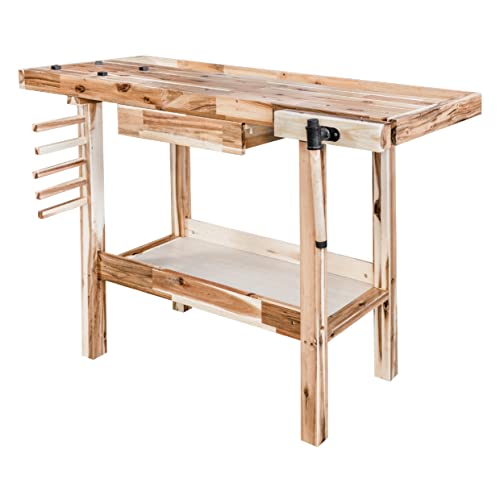

Table of Contents
Types of Workbenches
First, decide what kind of workbench suits your style. There’s the traditional twin-screw or vises-built bench — usually solid hardwood or thick plywood top, heavy frame, designed for dovetails and mortise-and-tenons. These are great for serious joinery, carcase work, and those long glue-ups that require stability. Then there’s the assembly or general purpose bench — lighter, often made of laminated plywood with a softer top, perfect for hobbyists doing lighter projects or assembly work.
If you’re into hand tools and detailed joinery, a sturdy woodworking bench with a proper face vise and dog holes is a must. For those who prefer power tools, a smaller, portable setup might suffice, but never skimp on solid support. Remember, my biggest gripe is builders who go cheap and end up fighting their own bench when joints need clamping or parts need to stay put. Don’t be that guy.
Materials and Construction
The best workbenches are built from hardwoods like maple, chestnut, or hard oak. Plywood, especially Baltic birch, can work if it's thick enough (at least ¾"), but beware of cheap laminates or particleboard — they won’t hold up under load or heavy vise pressure. Look for thick tops—at least 3 inches of solid core, preferably with a planer-jointed surface free of snipe or dips.
Frame construction should be mortise-and-tenon or dovetailed for strength. Cheaper frames tend to wobble or rack over time. A heavy, well-joined frame prevents shimmy and keeps your top aligned. And don’t overlook good leg assembly: sturdy cross-bracing underneath wards off racking and ensures a stable platform for heavy work.
Size and Height Considerations
The dimensions depend hugely on your shop space and projects. A typical woodworking bench is about 6 feet long, 2 to 2.5 feet deep, and stands around 34-36 inches high. This height strikes a balance — low enough for heavy planing and raising your work to a comfortable level, yet high enough when using power tools or clamps. But don’t blindly copy that; measure your body and workflow. Taller workbenches are better if you're tall or prefer underhand chisel work, while shorter ones can be easier for heavy planing if ergonomics are considered.
In tight spaces, go for a compact design but compromise on the length. Remember, you want enough space for your workpieces and room to maneuver. Cluttered benches hinder productivity and invite accidents. Keep it tight but functional.
Features to Consider
Prioritize a robust face vise with smooth, repeatable action—steel screw, not plastic or cheap castings. Dog holes along the top enable clamping with bench dogs, holding work steady for crosscuts or sawing. A built-in routing insert or removable sections add versatility, especially if you also use routers often. A storage shelf underneath is handy, but don’t clutter the footprint with unnecessary drawers you won’t use — focus on what keeps your workflow smooth.
Pay attention to the top’s flatness and resistance to dents or burns. A thick hardwood top is best, especially if you plan to use chisels or hand tools directly on the surface. For added accuracy, some pros retrofit their benches with a deadman on the front apron or a sliding deadman system. That’s the kind of durable feature that pays dividends over decades of use.
Final Picking Tips
Don’t fall for shiny manufacturing and trendy gadgets. Look for craftsmanship — tight joints, straight edges, and well-fitted vises. Shop in person if you can, and deliberately test how the workbench feels under your hand. Budget for quality because a cheap bench will cost you more in frustration and wear over the years. Prioritize stability and durability over bells and whistles.
If you plan to do a lot of hand work, lean toward a heavy, well-built model. For occasional projects, something portable or modular might do, but don’t compromise too much on stability. Remember, your workbench should become an extension of your hands—solid, predictable, and built to last.
Frequently Asked Questions
Should I buy a pre-made workbench or build my own?
If you have woodworking skills and some experience, building your own can be tailored exactly to your needs. Otherwise, a high-quality pre-made bench from a reputable maker is a safe investment. Never settle for junk from big-box stores — they’re often too wobbly or poorly finished.
What’s the ideal height for a workbench?
Typically around 34 inches, but it depends on your height and comfort. Test different heights by dropping your arms to a natural working position; your bench should allow you to work without hunching or overextending.
What materials are best for a top?
Solid hardwoods like maple or oak are top-tier. Plywood with a ¾" Baltic birch core can work if built well. Avoid cheap particleboard or MDF for heavy hand tool work—they’ll dent, burn, and warp.
Should I include vises or other features?
Absolutely. A well-made face vise is essential. Consider through-holes for bench dogs and accessories—these add versatility. But focus on quality hardware—steel and well-machined screws. Cheap vises wobble, strip, and waste your time.
How important is weight for a workbench?
Very. Heavier benches resist rack and shift. If it’s mobile, you lose stability. Invest in cast iron or heavy hardwood frames, and avoid lightweight particleboard or DIY frames that rattle or wobble under pressure.
Bold choices in your workbench translate to better work, fewer frustrations, and a shop that stands the test of time. Don’t cut corners here. Do your homework, pick something stout, and spend the remaining years making perfect joints instead of fighting your furniture.


